


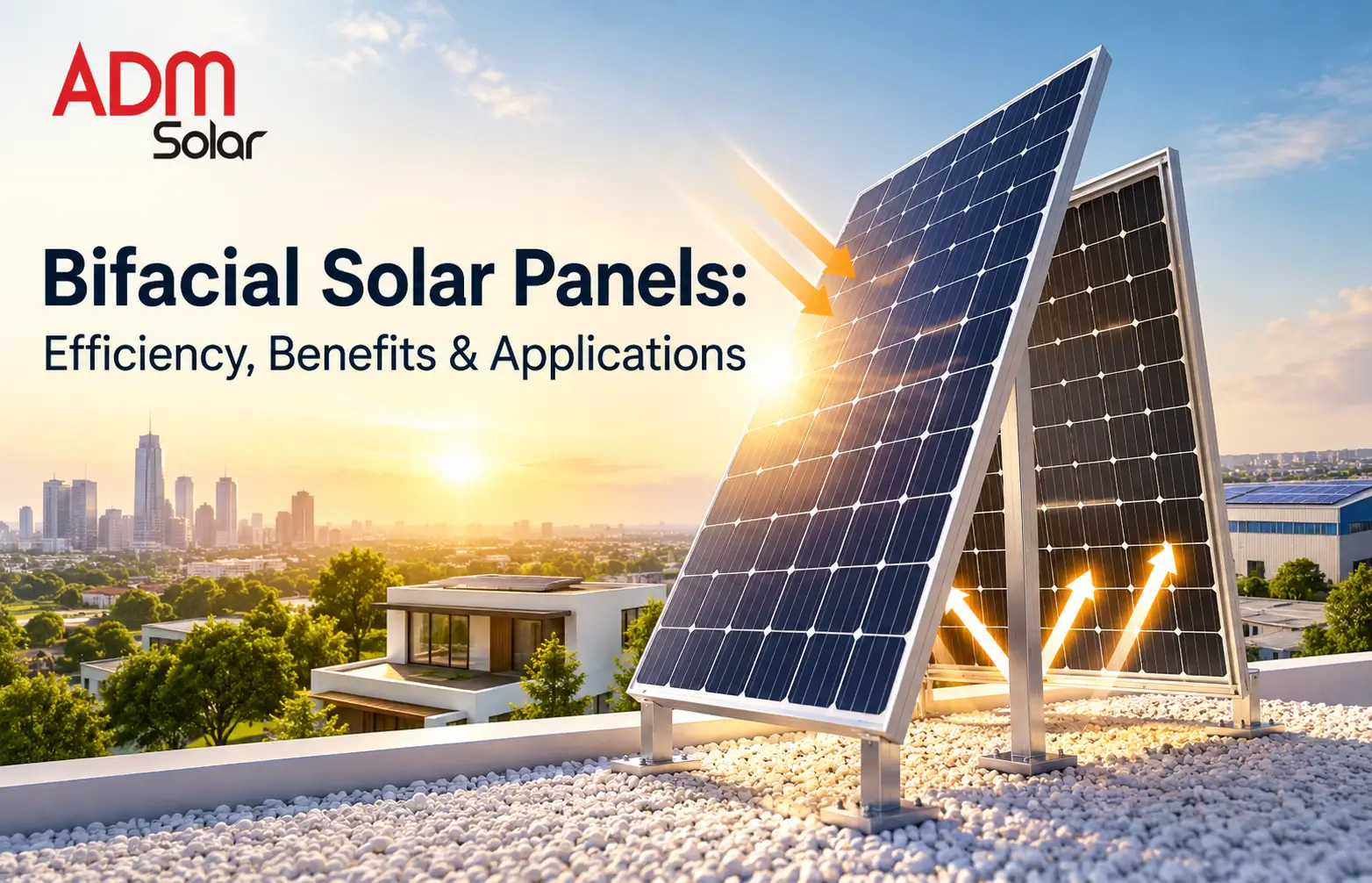
As solar technology advances, bifacial solar panels are gaining popularity across residential, commercial, and large-scale solar projects in India. Unlike conventional modules, these panels generate electricity from sunlight reaching both their front and rear surfaces, helping increase overall energy production.
With advanced technologies such as N-Type TOPCon and dual-glass construction, bifacial modules offer improved energy generation opportunities and long-term performance. Understanding their working principles, efficiency, benefits, and applications can help businesses and project developers make informed solar investments.
What Are Bifacial Solar Panels?
Bifacial solar panels are photovoltaic modules designed to generate electricity from both sides. The front surface captures direct sunlight, while the rear surface uses reflected light from the ground and surrounding areas to produce additional energy.
These panels typically feature bifacial solar cells and transparent rear materials that allow sunlight to reach both surfaces. Many modern modules use dual-glass bifacial technology, providing protection to the solar cells while allowing rear-side light absorption.
Bifacial modules are particularly suitable for elevated installations, ground-mounted solar plants, and projects with reflective surfaces. However, their actual energy gain depends on installation conditions.
How Do Bifacial Solar Panels Work?
Bifacial technology uses the photovoltaic effect to convert sunlight into electricity.
When sunlight reaches the front surface, solar cells generate direct current (DC) electricity. Meanwhile, sunlight reflected from surfaces such as concrete, sand, or light-colored roofing materials reaches the rear side and contributes additional power.
For example, panels installed above reflective concrete may receive extra sunlight from below, increasing total energy generation.
The electricity generated from both sides contributes to the system's overall output. However, rear-side performance depends on mounting height, ground reflectivity, shading, and panel spacing.
Proper installation design is essential to achieve the potential benefits of bifacial technology.
Bifacial Solar Panel Efficiency: How Much Energy Can They Generate?
Understanding bifacial solar panel efficiency requires distinguishing between solar cell conversion efficiency and additional rear-side energy generation.
Module efficiency measures how effectively sunlight is converted into electricity under standard testing conditions. Bifacial gain refers to additional electricity produced using reflected light.
Advanced N-Type TOPCon technology supports efficient electricity generation by reducing internal electrical losses and improving cell performance.
ADM Solar's N-Type TOPCon product information highlights a bifaciality factor of 80 ± 10% and a potential bifacial power gain of up to 30% under favorable conditions.
However, actual gains vary based on environmental factors, installation design, and available rear-side sunlight. A site-specific energy assessment is recommended before estimating project output.
Key Benefits of Bifacial Solar Panels
Additional Electricity Generation
Bifacial modules utilize reflected sunlight to generate additional electricity, potentially increasing annual energy production compared with similar front-side-only installations.
Better Sunlight Utilization
By absorbing sunlight from both surfaces, these modules make effective use of available solar radiation, particularly in open and elevated installations.
Long-Term Energy Value
Additional electricity generation can improve overall project economics, depending on installation costs, operating conditions, and actual energy yield.
Advanced Solar Technologies
Bifacial modules are available with technologies such as Mono PERC and N-Type TOPCon, allowing buyers to select suitable products based on performance requirements.
Durable Module Design
Many bifacial modules use dual-glass construction, offering protection against environmental exposure and supporting long-term reliability when properly installed.
What Is a TOPCon Bifacial Solar Panel?
A TOPCon bifacial solar panel combines Tunnel Oxide Passivated Contact (TOPCon) cell technology with dual-sided electricity generation.
TOPCon technology uses a thin tunnel oxide layer and passivated contacts to reduce electron recombination losses and improve solar cell efficiency.
When combined with bifacial construction, the module can generate electricity efficiently from the front while utilizing reflected sunlight at the rear.
N-Type TOPCon technology also offers favorable temperature performance and reduced susceptibility to certain degradation mechanisms, including light-induced degradation (LID).
ADM Solar offers N-Type TOPCon dual-glass bifacial modules in 570–600 Wp and 605–650 Wp product ranges. These modules are designed for solar projects requiring high power output and advanced photovoltaic technology.
Buyers should review module datasheets to compare efficiency, electrical specifications, dimensions, and installation requirements.
Factors That Affect Bifacial Solar Panel Performance
Several environmental and installation factors influence bifacial module performance.
Ground Reflectivity
Ground reflectivity, or albedo, determines how much sunlight reaches the rear surface. Light-colored concrete and reflective materials generally provide greater rear-side illumination than darker surfaces.
Mounting Height
Adequate space beneath the modules allows reflected sunlight to reach the rear cells. Greater mounting height may improve rear-side exposure, depending on system design.
Installation Angle and Orientation
Proper tilt angle and orientation help balance direct sunlight absorption with potential rear-side energy generation.
Shading and Temperature
Shadows from nearby structures and module rows can reduce electricity production. High operating temperatures also affect module output, making ventilation and appropriate system design important.
Applications of Bifacial Solar Panels in India
Bifacial technology supports multiple solar applications where installation conditions allow sufficient rear-side sunlight.
Utility-Scale Solar Power Plants
Ground-mounted solar projects can benefit from optimized row spacing, mounting structures, and reflective surfaces to increase annual electricity generation.
Commercial and Industrial Projects
Factories, warehouses, and commercial facilities can use bifacial modules in suitable rooftop or ground-mounted systems to support electricity requirements.
Agricultural Solar Installations
Elevated bifacial structures can be considered for agricultural and agrivoltaic projects, where appropriately designed installations allow solar generation alongside certain farming activities.
Solar Carports and Elevated Structures
Solar carports and elevated mounting systems provide space beneath the modules, allowing reflected light to reach the rear surface and contribute additional electricity.
How to Choose the Right Bifacial Solar Panel for Your Project
Selecting bifacial modules requires evaluating energy requirements, installation conditions, and technical specifications.
Consider the module's rated power, efficiency, bifaciality factor, temperature coefficient, degradation characteristics, and warranty coverage.
Installation conditions are equally important. Reflective surfaces, adequate mounting height, and limited rear-side shading can help improve additional energy generation.
Businesses and EPC contractors should also evaluate manufacturer certifications, technical documentation, and expected annual electricity output.
A site-specific energy yield assessment helps determine whether the selected bifacial module is suitable for the project.
Why Choose ADM Solar Bifacial Solar Panels?
ADM Solar is an Indian solar panel manufacturer based in Faridabad, Haryana, offering photovoltaic modules for residential, commercial, industrial, and utility-scale projects.
Its product portfolio includes Mono PERC and N-Type TOPCon bifacial modules, designed to support different solar installation requirements.
Key product characteristics include:
- N-Type TOPCon Technology: Advanced cell architecture that reduces electrical losses and supports efficient energy conversion.
- Dual-Glass Bifacial Construction: Allows front-side and rear-side electricity generation.
- Reduced Degradation: N-Type technology helps minimize certain performance losses over time.
- Advanced Manufacturing: Multi-busbar connections and modern cell-processing techniques support module reliability.
- Quality Standards: ADM Solar identifies its applicable modules as BIS certified and ALMM enlisted.
Explore the ADM Solar Bifacial Solar Panel range for available technologies and detailed product specifications.
Building a More Efficient Solar Future
Bifacial solar technology offers an opportunity to generate additional electricity by utilizing sunlight from both sides of a module. Combined with advances in N-Type TOPCon technology and dual-glass construction, these panels provide options for efficient, long-term solar installations.
For Indian businesses and project developers, choosing the right modules requires balancing technical performance with site conditions and energy requirements.
ADM Solar offers bifacial solar modules for a range of project applications, helping buyers explore reliable and advanced photovoltaic solutions.
Visit ADM Solar to explore its solar module portfolio and choose a suitable solution for your upcoming solar project.